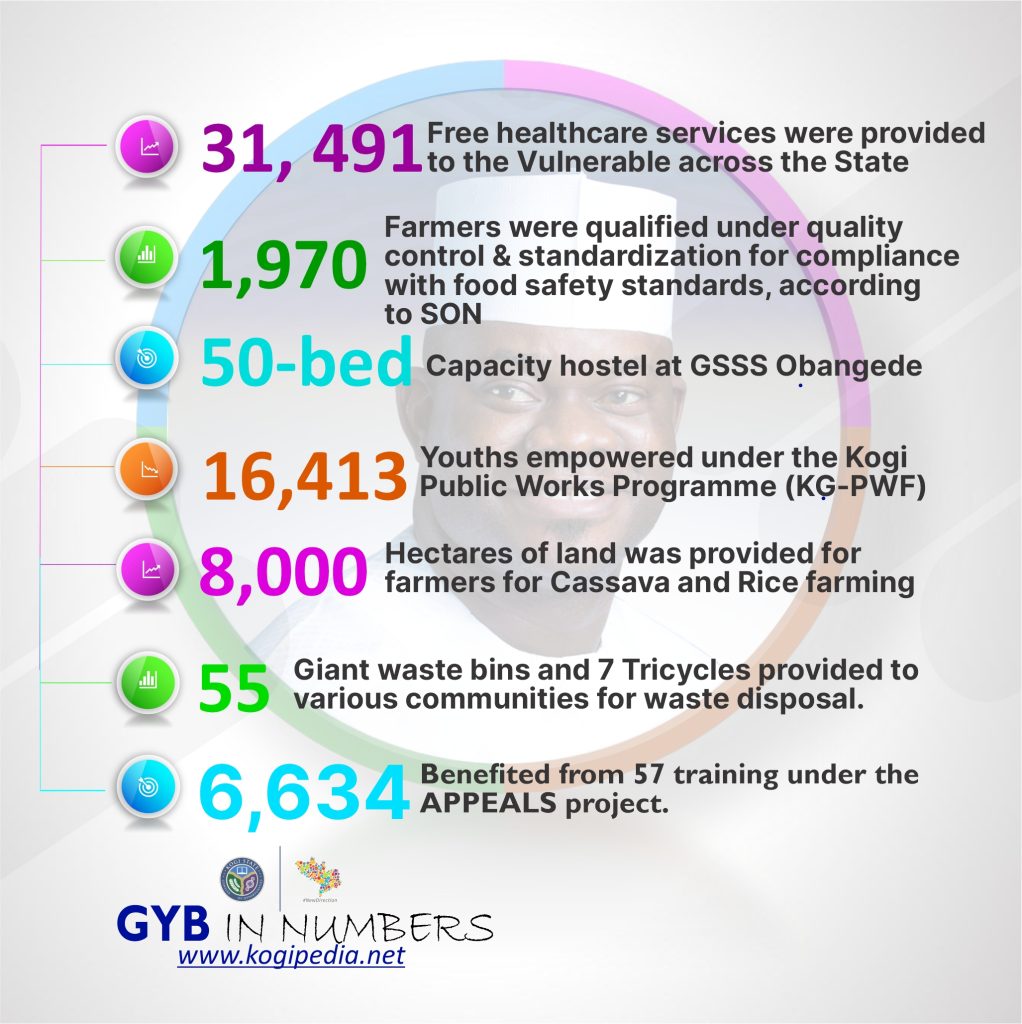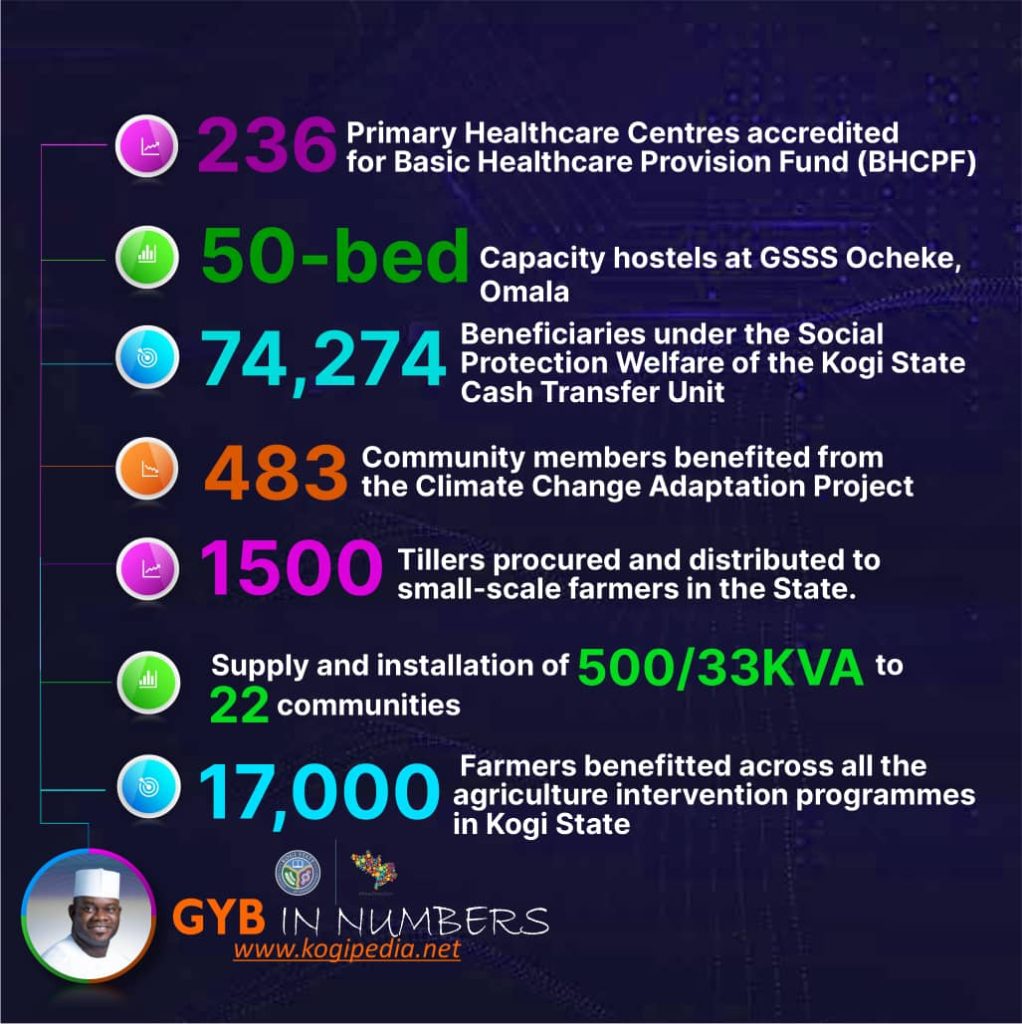
GYB In Numbers
.

KOGI STATE: ACHIEVING THE RANK OF 2ND HIGHEST RICE PRODUCING STATE IN NIGERIA
This is a brief narrative of the success story of rice production in Kogi State, Nigeria.
Prior to Governor Yahaya Bello’s administration, agriculture in Kogi State was almost non-existent due to systemic decay, leadership problems, and lack of political will. However, the governor’s prioritization of agriculture, through the Agricultural Rebirth Policy, led to a summit that proffered solutions to the problems bedeviling the sector. Rice was identified as a major crop in which the state had comparative advantages and was prioritized. This led to the reinvention of the Anchor Borrower Scheme and other strategies that have made the state the second-highest rice-producing state in Nigeria.
Introduction:
Agriculture is an essential sector for the development of any country. In Nigeria, agriculture accounts for about 22% of the country’s gross domestic product (GDP), and it is a significant employer of labor. The sector has the potential to provide food security and contribute to the country’s economy. However, the sector has faced several challenges such as poor infrastructure, inadequate funding, and poor implementation of policies. This paper discusses the success story of rice production in Kogi State, Nigeria.
The Evolution of Rice Production in Kogi State:
Prior to the advent of Governor Yahaya Bello’s administration, agriculture in Kogi State was almost non-existent due to systemic decay, leadership problems, and lack of political will. Governor Yahaya Bello’s administration gave the sector a lifeline by prioritizing it as a platform for job creation and youth engagement. Given the State’s vast arable land crisscrossed by massive water bodies, especially the Rivers Niger and Benue, coupled with the human capacity that could put these natural resources into use, there was no doubt that Kogi State is in for considerable increase in her Gross Domestic Product.
Governor Yahaya Bello declared an emergency in the Agricultural Sector through the Agricultural Rebirth Policy (2017). A summit that dissected all the problems bedeviling the agricultural sector in Kogi State was convened, and immediate to extended period solutions were proffered, collated and implemented to rejig the sector. Most importantly, crops in which the state had immense comparative advantages were identified and prioritized.
Rice Production in Kogi State:
Rice is one of the major staple foods in Nigeria, consumed across all geopolitical zones and socioeconomic classes. Rice consumption is increasing rapidly in Nigeria because of the shift in consumer preference towards rice, increasing population growth, increased income levels, and rapid urbanization. However, rice production falls short of demand; the country depends heavily on rice importation of over 3 million tonnes annually, equivalent to over US$480 million in scarce foreign exchange.
The efforts of the government, starting from 2015, have aimed at stimulating private sector involvement and boosting local production. The country’s rice production rose from 3.7 million metric tonnes in 2017 to 4.0 million metric tonnes in 2018. Some of the states credited as major rice-producing states are Kebbi, Borno, Kano, and Kaduna. Reports (2021) have shown recently that Kogi is now one of the ranking states in rice production in Nigeria.
Governor Yahaya Bello’s vision for the sector prioritized rice production, considering the availability of land and the massive water bodies of the Rivers Niger & Benue, rice production would be of real economic value to the State. To drive the process through a private sector-led participation in the sector and the enabling environment provided by the government, the Anchor Borrower Scheme, a Central Bank of Nigeria intervention for farmers, was reinvented.
Additionally, the government has also supported the development of rice value chains in the state. The government, in collaboration with private sector partners, established rice processing centers, which help to increase rice processing capacity and reduce post-harvest losses. The centers provide facilities for the milling, sorting, and packaging of rice, which ensures that the rice produced in the state meets international quality standards. These centers have also created employment opportunities for youth in the state, as they provide jobs for both skilled and unskilled workers.
Furthermore, the state government has also provided extension services to farmers to improve their farming techniques and enhance their productivity. Extension services have been provided through partnerships with private sector organizations and development partners, who provide training and technical assistance to farmers. Through these extension services, farmers have been taught how to use improved seeds, fertilizers, and pesticides, which have significantly improved their yields.
In addition, the state government has also embarked on a massive land development program to increase the amount of arable land available for farming. The land development program involves clearing and developing previously uncultivated lands and making them available to farmers for cultivation. This has increased the amount of land available for rice farming in the state, which has led to an increase in rice production.
Moreover, the government has also provided infrastructure to support the development of the rice sector. The government has constructed new roads, bridges, and irrigation systems to facilitate the transportation of rice and irrigation of rice fields. This has made it easier for farmers to transport their produce to markets and for irrigation systems to be put in place.
As a result of these interventions, Kogi state has emerged as the second-highest rice-producing state in Nigeria, with an annual production of over 1.5 million metric tonnes of rice. This represents a significant increase from the previous production levels of the state, which was at an all-time low before the current government’s intervention. The increase in rice production has had a positive impact on the state’s economy, as it has created jobs, increased the income of farmers, and reduced the state’s dependence on imported rice.
In conclusion, the success story of how Kogi state achieved the second-highest rice-producing state in Nigeria is a result of a combination of factors, including political will, private sector participation, technical assistance, and infrastructure development. The government’s interventions have created a conducive environment for rice production and have facilitated the participation of the private sector in the rice sector. This has led to an increase in rice production, which has had a positive impact on the state’s economy. It is hoped that other states in Nigeria can learn from Kogi state’s success story and replicate its interventions to increase their rice production levels.
This is a touch of Governor Yahaya Bello in Olamaboro LGA of kogi State.
We are majority a people of gratitude with deeply rooted unity of purpose. We repay good with good.
There may be few who will never see or say anything good. They are found in every community.
But Olamaboro has shown gratitude in numbers by turning up for APC in the just concluded elections.
Thank you Olamaboro for standing right always.
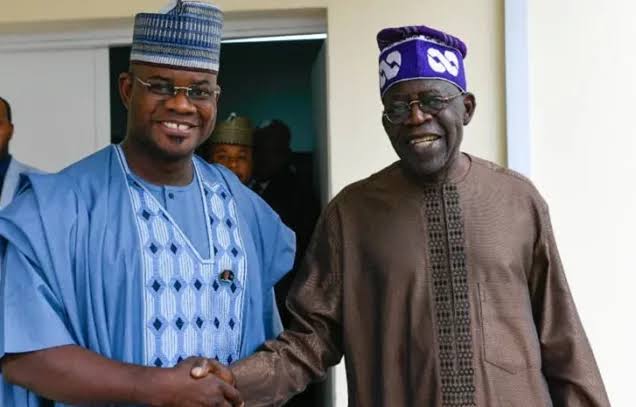
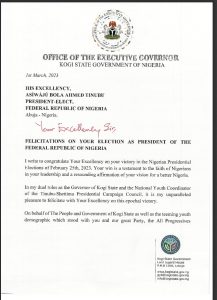
Click the image below to read the congratulating message of His Excellency, Governor Yahaya Bello, to the president elect of the Federal Republic of Nigeria on a PDF version.
Click on the images below to view the PDF version of the KGVCDP Progress Report

The Federal Government is to relocate 10, 000 persons in Mosun Community in Bassa Local Government Area of Kogi following the rampaging activities of the River Benue during raining season.
Alhaji Abubakar Yelwa, the Managing Director (MD) of the Hydro-Electricity Power Producing Areas Development Commission (HYPPADEC), made this known on Monday during a tour of the affected communities in Mosun Community.
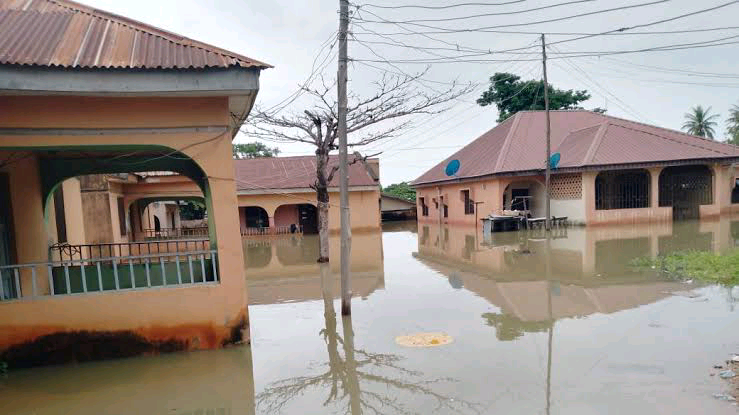
Yelwa said that the relocation of the affected communities became imperative sequel to the negative impact of the 2022 flood in the affected communities as villagers had to desert their homes for safety.
“We will begin construction of buildings that would accommodate the affected villagers in two weeks if we are shown the piece of land by the traditional ruler and the Bassa Local Government authorities.
“What we are afraid of is the flood for 2023, going by the prediction of NiMet, which says this year’s rain would be heavier than that of 2022, which may mean more flood than what we experienced.
“Here we are at the site, and you can see for yourselves the levels of damaging activities of the River Benue in these communities within Mosun kingdom. We have to do something to save their lives and make their living worthwhile.
“As soon as the authorities show us the piece of land to relocate them, we shall begin construction work immediately. We are ready to move our equipment to the river banks to start work on controlling ithe ravaging erosive activities, ” the MD said.
Earlier, the traditional ruler of the Mosun Kingdom, Alhaji Burka Ali, told the HYPPADEC boss and his entourage that the 2022 flood was very devastating.
”No fewer than 10,000 people were displaced by the 2022 flood. In fact, land space of over 300m was washed away by the flood.
“As for the piece of land for the resettlement of my unfortunate people, we have already selected a piece of land to show HYPPADEC.
“I am short of words. We appreciate the commission and the Federal Government for this show of love and concern to the people of my kingdom.
“We are ready to cooperate with HYPPADEC to see that the resettlement programme is a success for the good of our fellow brothers and sisters as well as our children, who have suffering due the flood, ” Ali said.
The News Agency of Nigeria (NAN) reports that the visit of the commission to the Mosun kingdom was spiced with the award of chieftaincy title to the HYPPADEC boss and Alhaji Isa Ozi-Salami, the Kogi Representative on the governing board of the commission.
While Yelwa was crowned as the “Ondaihi” (Galadima) of Bassa Land, Ozi-Salami was crowned the “Oniereza Ogbanyi of Mozum kingdom.
NAN reports that NiMET warned Nigerians to prepare for an earlier-than-expected onset of rainfall in most parts of Nigeria.
Starting on or around March 2, NiMET said, the coastal areas of the south-south comprising Bayelsa, Rivers, and Akwa-Ibom will see heavy rainfall.
NiMET said an extended rainfall season is predicted to occur in Gombe, Kaduna, Kwara, Enugu, Anambra, western Ogun, and Lagos states.
The northern states of Sokoto, Kebbi, Zamfara, Kano, Katsina, Jigawa, Yobe and Borno will have an onset of rain between June and July.
Peak rainfall would be between July and September.
It said the coastal zone of the South-south states of Bayelsa, Rivers, and Akwa Ibom will observe unpleasant rainfall changes.
NiMET also said the central states are likely to wait until May while Katsina, Zamfara, Kano, Jigawa, Yobe, Cross River, Ebonyi, Imo, and Rivers will experience delayed onset of rainfall.
For Sokoto, Kebbi, Zamfara, Kano, Katsina, Jigawa, Yobe and Borno the rains will not begin until June and July. Only Adamawa, Bauchi, Gombe, Kwara Gombe, Kwara, Oyo, Ogun, and Lagos will be near normal but with a worrisome quantity.
NiMET added that the noticeable increase in climate change and human-triggered activities including indiscriminate dumping of wastes will cause more floods in 2023 and that the waters will come in high intensity within a short duration. (NAN)